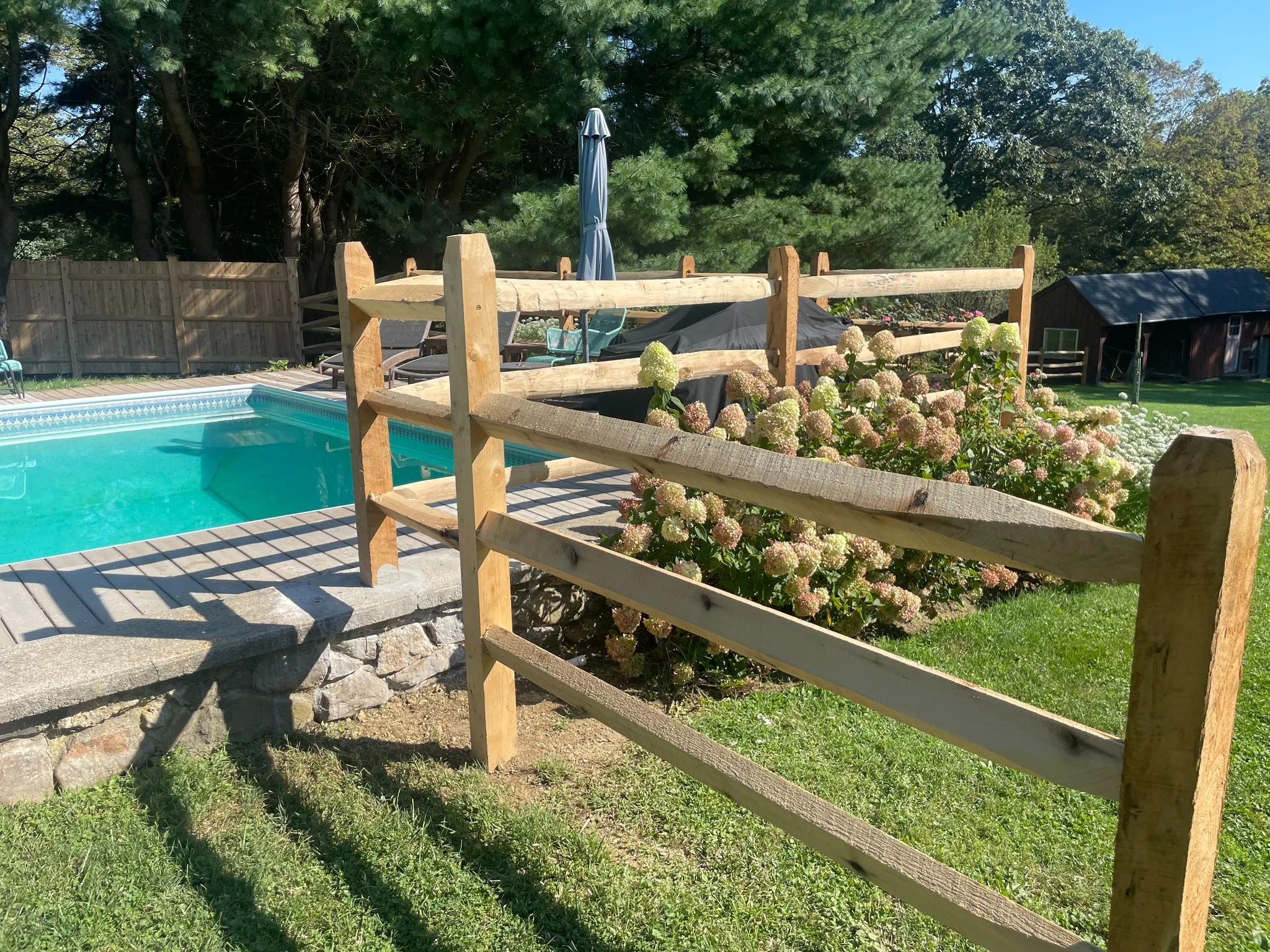
Every pool install in New Jersey lives or dies at the fence inspection. Homeowners often think, “Just put up a 4-foot fence,” but inspectors measure height, gap width, gate swing, latch position, and property-line setbacks. Miss one requirement and the pool cannot be approved for use.
We install pool barriers across Gloucester, Camden, and Burlington counties. This is the shortlist of NJ pool fence requirements that are actually checked: the state pool safety fence code, the gate rules that lead to the most re-inspections, the local township requirements that go beyond state code, and the factors that drive the cost of a compliant pool fence installation in South Jersey.
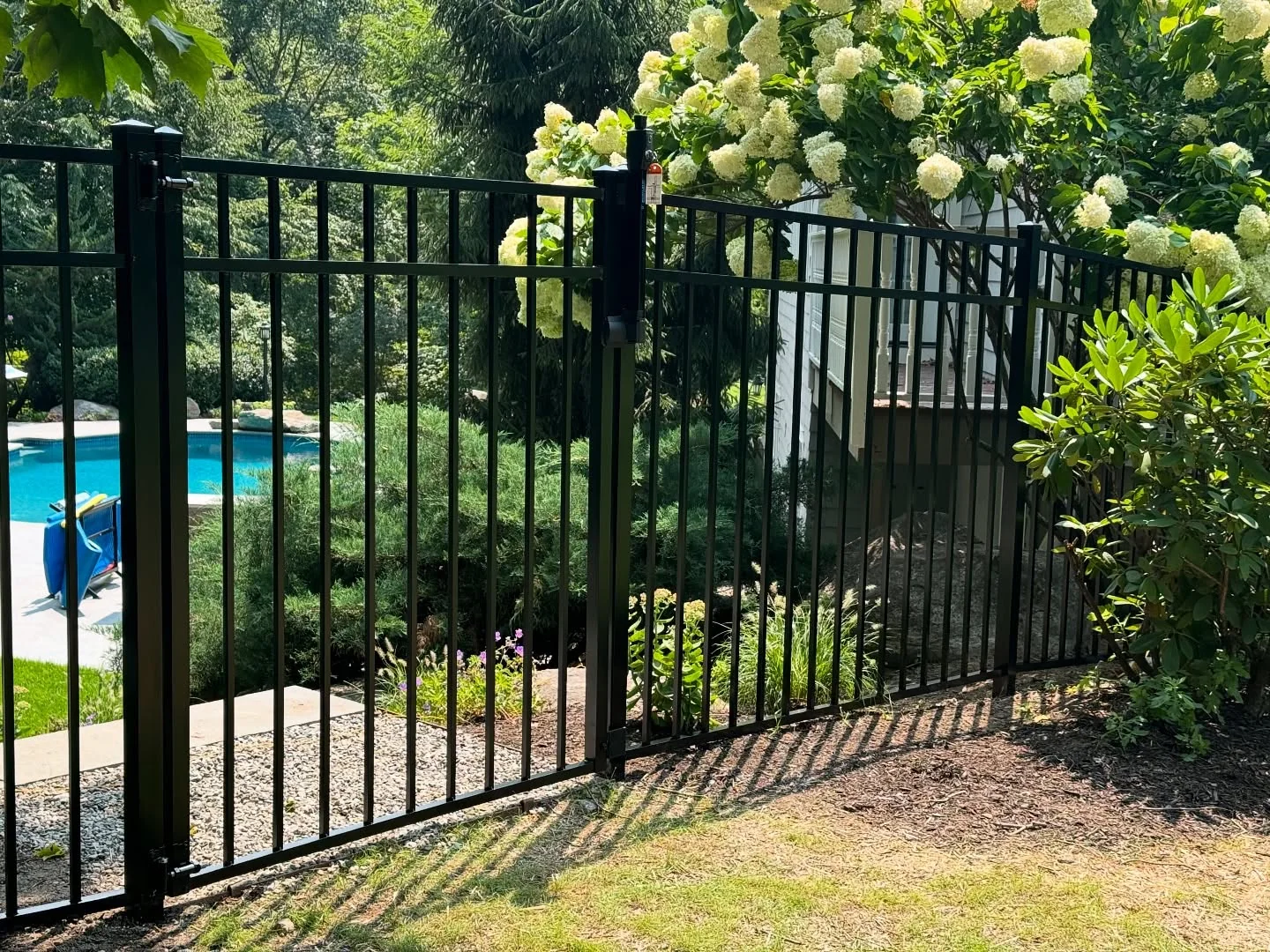
Black aluminum pool fence enclosing a residential backyard beside a wooded property.
New Jersey adopts the 2018 International Swimming Pool and Spa Code (ISPSC) Section 305 under N.J.A.C. 5:23. Every residential outdoor pool must have a barrier that meets these baseline requirements.
The top of the barrier must be at least 48 inches above grade, measured on the side facing away from the pool. On a sloped yard, inspectors measure fence height from the ground outside the pool area, so a fence that appears 48 inches tall from the poolside may not meet code if the outside grade is higher.
No opening in the barrier can allow a 4-inch sphere to pass through. Inspectors carry the test ball, and if it fits through any opening, the fence fails.
For fences with vertical pickets, the spacing between pickets can be no more than 1¾ inches when the horizontal rails are less than 45 inches apart. When the rails are 45 inches or more apart, picket spacing can be up to 4 inches.
New Jersey removed the ISPSC exception that allowed removable ladders or flip-up stairs to serve as the only barrier for an above-ground pool. Even a 48-inch pool wall now requires a compliant barrier around the access ladder or stairs.
Aluminum is the material we install most often for pool enclosures because it meets the ISPSC requirements cleanly and performs well around chlorinated water. Learn more about our pool fence installation service is designed around these NJ pool fence requirements before the inspector arrives.
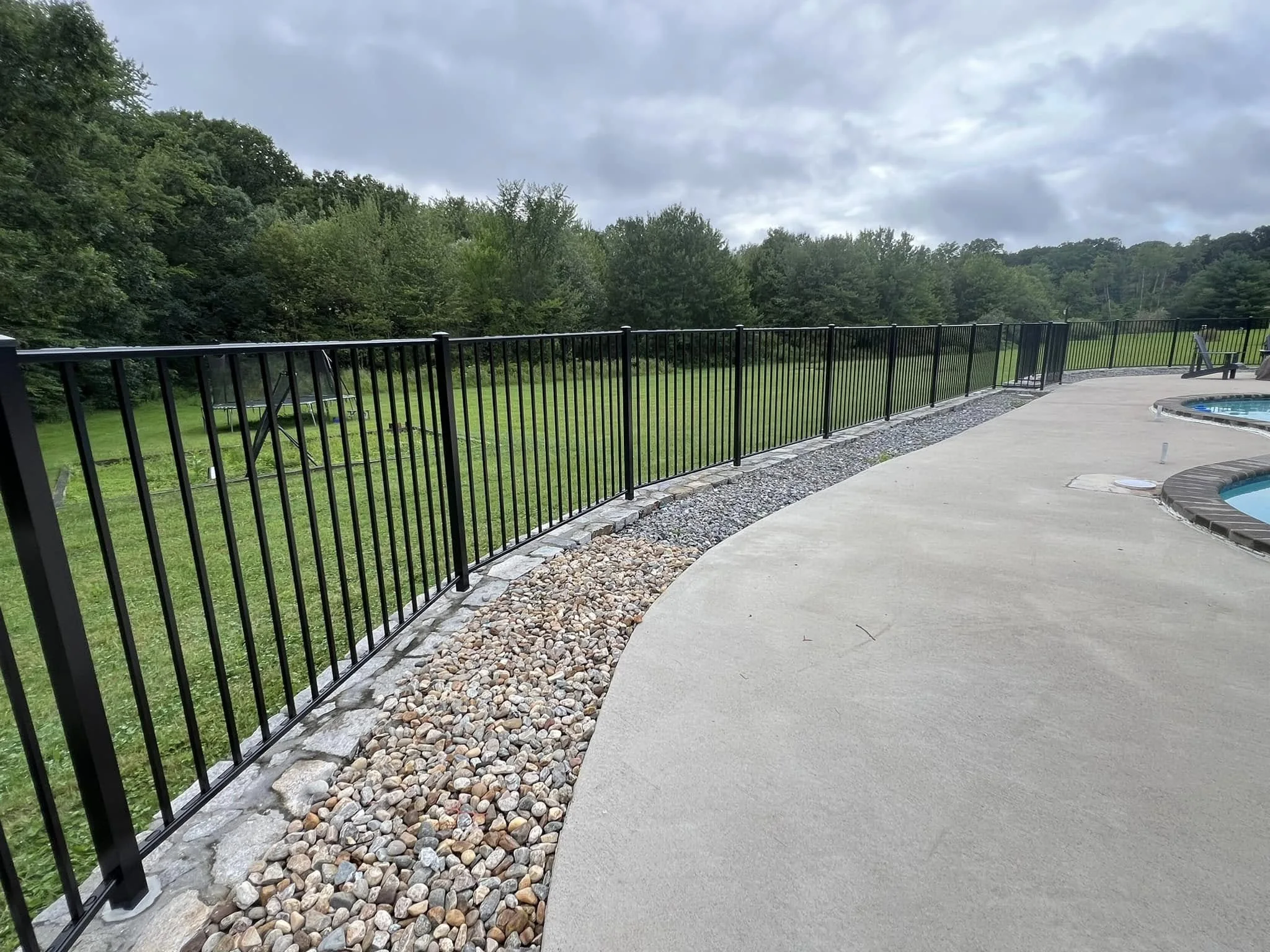
During a pool fence inspection in NJ, more failures happen at the gate than anywhere else on the barrier.
This is where properly installed gate installation process includes adjusting and testing each pool gate so it closes and latches on its own before the final inspection.
State code establishes the minimum NJ pool fence requirements. Townships add permit rules, setbacks, and local restrictions.
Gloucester Township requires a swimming pool permit before the pool or barrier is built. The pool wall must be at least 10 feet from the rear and side property lines and 30 feet from any street property line. The fence design has to work within those setbacks.
Washington Township’s pool fence height requirements limit residential pool fences to 4–6 feet. A zoning permit is required for the fence, and a construction permit is also required when the fence serves as the pool barrier.
That translates into two permits, not one. You can reach the Planning and Zoning office at 856-589-0520.
Cherry Hill, Mount Laurel, Voorhees, and other municipalities layer their own setback rules, material restrictions, and HOA requirements on top of the state code. We verify those requirements before we quote a project. See our Gloucester County service area for more information.
Many South Jersey pools sit directly behind the house. When a dwelling wall forms one side of the barrier, ISPSC 305.4 adds another requirement: any door or window opening into the pool area must have additional protection.
The approved options are:
This is one of the most common DIY inspection failures. Homeowners fence three sides of the pool, count the house as the fourth side, and then fail because the sliding door opening to the pool area has no alarm or self-latching mechanism.
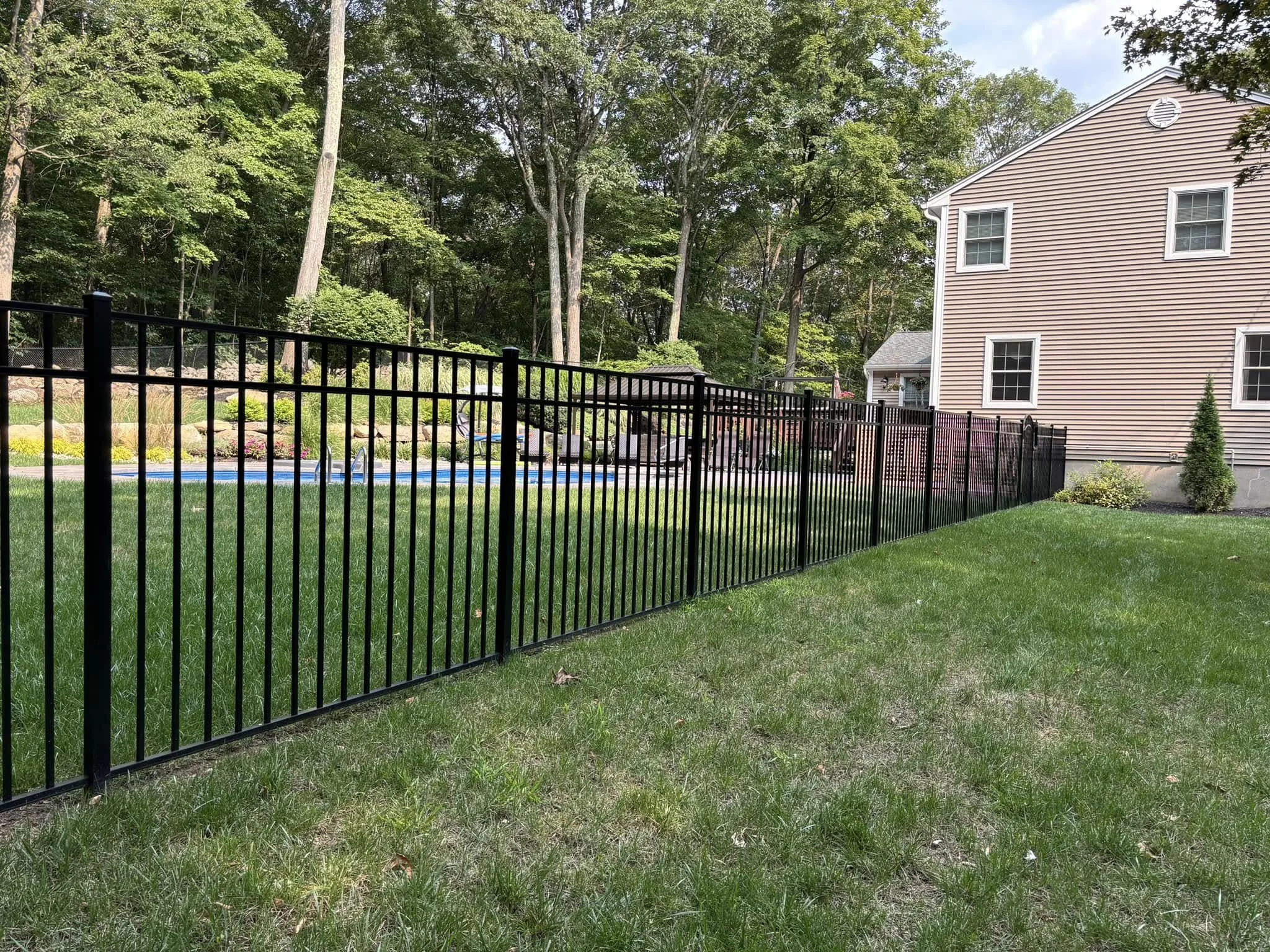
The fence must be installed and inspected before the pool is filled with water. New Jersey issues a Certificate of Approval for residential pools, and the barrier inspection is part of that approval process.
We coordinate each of these steps as part of the installation process.
In South Jersey, aluminum fencing is the most common pool fence material. The code establishes the safety requirements, but the actual project cost is driven by your yard layout, gate count, slope, and township permitting requirements.
If you're building a pool in Gloucester, Camden, or Burlington County, we can help with the fence permit and the inspection sign-off process, and we handle the 811 utility mark-out.
Get a free estimate or call (856) 230-7082.
Tri-State Fence & Deck Inc.
591 Mantua Blvd Suite 201
Sewell, NJ 08080
(856) 230-7082
